

Contactors/Relays
Power contactors and industrial relays provide the essential electrical switching required for safe and reliable industrial heating control. These heavy-duty components allow low-power temperature controllers and safety devices to switch high-current heater loads, ensuring stable operation across industrial ovens, furnaces, infrared heaters, and process heating systems. Designed for integration into heater control panels and electrical enclosures, they support dependable heater operation in demanding commercial and industrial environments.
Whether specifying switching components for new heating installations or sourcing compatible replacements for existing equipment, our range of power contactors and industrial relays delivers long service life and consistent performance. Suitable for resistive heating circuits and continuous-duty applications, they form the critical interface between control systems and heating elements, enabling precise and protected heater switching across a wide range of industrial processes.
-
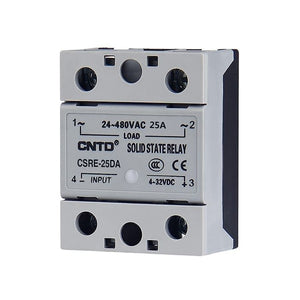
Zero-Crossing Solid-State Relays (SSRs): The Ultimate in Silent & Precise Control
Regular price From £15.00Regular price -
Save £0.86
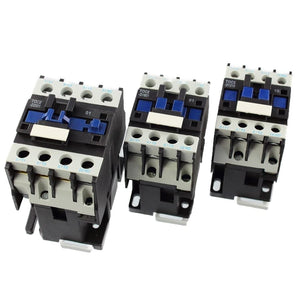
Electrical AC 240V Contactors – 12A to 65A | Heavy-Duty 3 Pole Contactors
Regular price From £7.78Regular price£8.64-£0.86 Sale price From £7.78 -
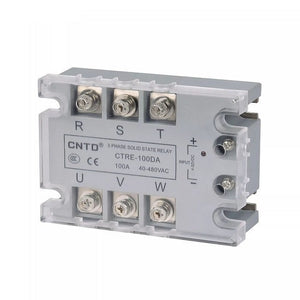
Three-Phase Solid State Relay (SSR) 25A: Silent, High-Performance Control
Regular price £24.96Regular price -
Sold out

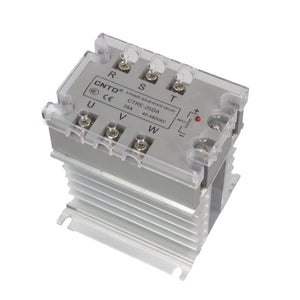
Heatsink for SSR 10–120A CTR Solid State Relays – 80×80×100mm
Regular price £10.50Regular price£0.00Sale price £10.50 -


Heatsink for SSR 10–40A CSR Models
Regular price From £4.80Regular price -
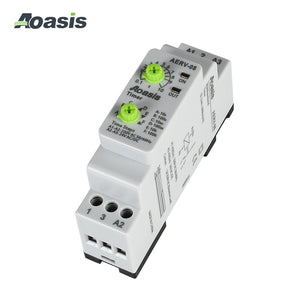
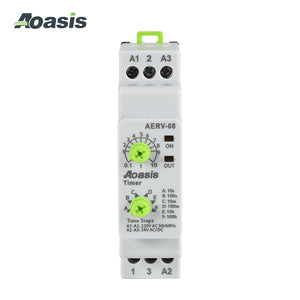
Single Function Time Delay Relay – 24V/220V, 0.1-100hr
Regular price £9.54Regular price£0.00Sale price £9.54 -
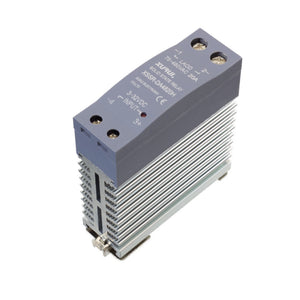
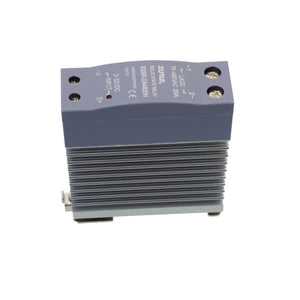
Solid State Relays DIN rail Mount with Heatsink
Regular price From £18.00Regular price -
Three-Phase Solid State Relay (SSR) 40A: High-Power, Silent, & Ultra-Reliable Control
Regular price £29.00Regular price -
Three-Phase Solid State Relay (SSR) 100A: Ultimate Power, Silent, & Ultra-Reliable Control
Regular price £63.00Regular price -
Three-Phase Solid State Relay (SSR) 60A: High-Power, Silent, & Ultra-Reliable Control
Regular price £33.50Regular price -


Solid State Relays – 25A, 50A & 75A | 240V AC Input, 3–32V DC Control
Regular price From £14.00Regular price -
Save £2.04
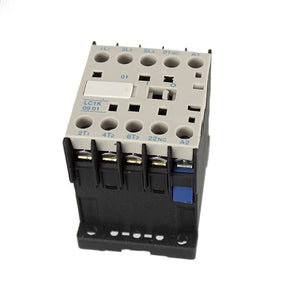
Mini Contactor 240V Coil 3 Pole 12A
Regular price £18.36Regular price£20.40-£2.04 Sale price £18.36 -
Three-Phase Solid State Relay (SSR) 80A: Extreme Power, Silent, & Ultra-Reliable Control
Regular price £56.00Regular price -
Save £1.56
Mini Contactor 240V Coil 3 Pole 9A
Regular price £14.04Regular price£15.60-£1.56 Sale price £14.04


Frequently Asked Questions (FAQs)
What is a contactor relay used for in industrial heating systems?
What is a contactor relay used for in industrial heating systems?
What is the difference between a power contactor and an industrial relay?
What is the difference between a power contactor and an industrial relay?
Can a temperature controller drive a power contactor directly?
Can a temperature controller drive a power contactor directly?
How do I choose the correct contactor rating for a heater?
How do I choose the correct contactor rating for a heater?
Why are contactors used instead of switching heaters directly from controllers?
Why are contactors used instead of switching heaters directly from controllers?